
Kenya has placed 10 people in quarantine and identified 57 contacts following the country’s first confirmed case of Bundibugyo Ebola Virus Disease, as health officials intensify efforts to prevent further transmission.
The number of contacts has risen from the initial 28 identified after the patient’s death on Monday night, with Ministry of Health teams now in the field tracing people who may have come into contact with the patient or his relatives.
The Ministry said 28 initial contacts included family members and healthcare workers who attended to the patient. Authorities were also tracing 23 passengers and four crew members who travelled on the same Jambojet flight from Kampala to Nairobi.
Public Health and Professional Standards Principal Secretary Mary Muthoni said the country remained on high alert, with health officials across the country activated to detect and respond to any suspected cases.
Muthoni said the government was working with county governments and faith-based health facilities to prepare for a possible increase in cases.
She, however, said Kenya was not experiencing an outbreak, describing the situation as an imported case under management.
The first patient was a Kenyan citizen who had lived in the Democratic Republic of Congo for seven years.
He fell ill about a month before travelling from the DRC by road to Kampala, Uganda, where he boarded Jambojet flight 8523 to Nairobi on October 3, arriving at Jomo Kenyatta International Airport (JKIA) at 1:10pm.
After arriving in Nairobi, the patient was taken to Nairobi Hospital, where he was isolated and assessed before being transferred to the hospital’s East Wing Isolation Facility.
He presented with fever, chills, fatigue, muscle pain, painful swallowing, sore throat and bleeding under the skin at injection sites.
Samples collected from the patient were independently tested at the National Virology Reference Laboratory and the Kenya Medical Research Institute, with both laboratories confirming Bundibugyo Ebola Virus Disease. He subsequently died on the night of October 5 and was buried on October 6 under safe and dignified burial protocols.
The Ministry said that before the first case was confirmed, Kenya had already tested 267 suspected samples at five laboratories across the country. The laboratories include the National Virology Reference Laboratory, KEMRI laboratories in Nairobi and Kisumu, and mobile laboratories at the Busia and Lwakhakha border points.
Of the 267 samples tested, one—the sample from the first patient—tested positive.
Health Director-General Dr Patrick Amoth said adequate quarantine capacity was available and that temporary facilities could be established if required.
Surveillance has been heightened at 15 points of entry, while isolation and treatment centres are being activated in counties bordering neighbouring countries.
The Ministry says 23 isolation and treatment centres are available, including facilities at Kenyatta National Hospital, National Police Service Hospital, Moi Teaching and Referral Hospital and the US-funded quarantine facility at Laikipia Air Base in Nanyuki.
Kenya had also screened more than 652,000 travellers for Ebola as of October 6 and trained 4,971 health workers in prevention and management of the disease.
The World Health Organization said it was supporting Kenya's response, including case investigation, contact monitoring, laboratory capacity and infection-prevention measures. WHO said about 1,000 Ebola tests and 1,000 personal protective equipment kits had been delivered to high-risk counties.
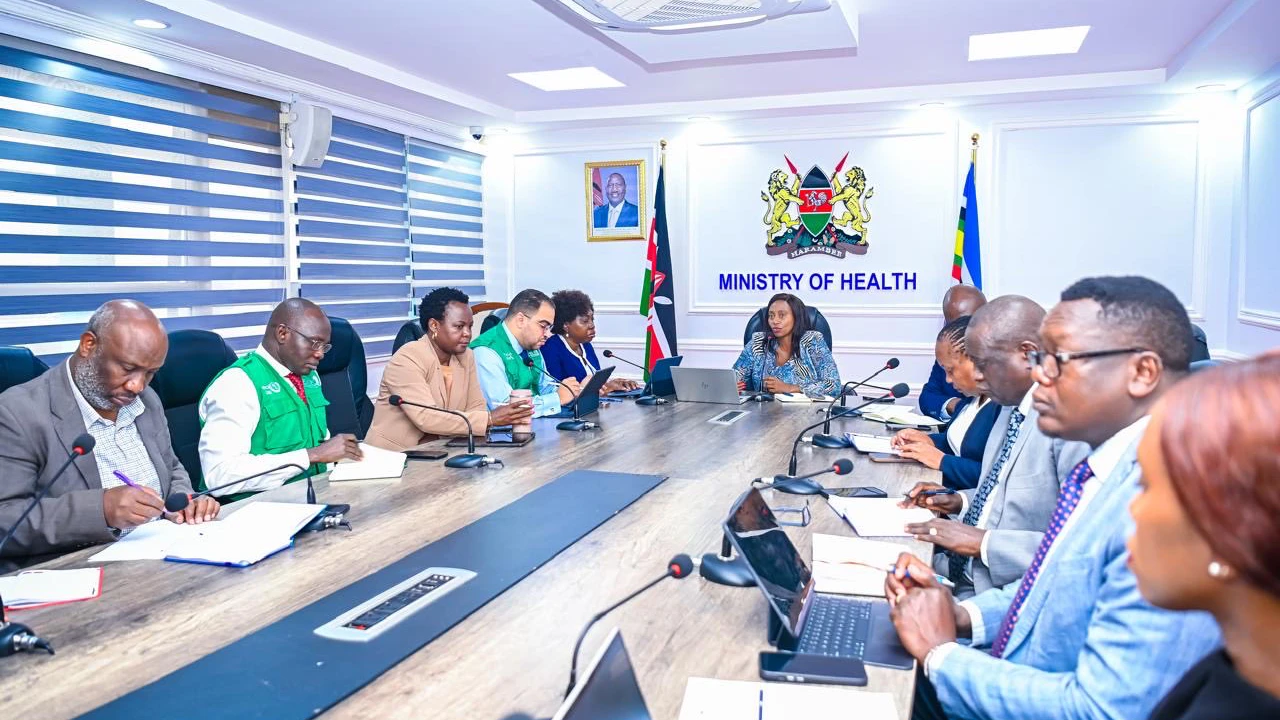
The stakeholder meeting chaired by Muthoni resolved that regular meetings would be held to assess the response and address emerging gaps, with authorities emphasizing timely communication to keep the public informed.
The government has urged Kenyans to maintain hand hygiene, avoid close contact with people who are sick and seek medical attention at recognised health facilities if they develop symptoms.
Be the First to Comment