
The National Council on the Administration of Justice (NCAJ) has assured the public that there is no crisis in the justice sector in the country and it remains committed to justice delivery.
NCAJ chairperson Chief Justice Martha Koome said the council’s operations are well structured and that they collaborate closely across institutions.
Chief Justice Koome said that they remain committed to strengthening the administration and access to justice for all.
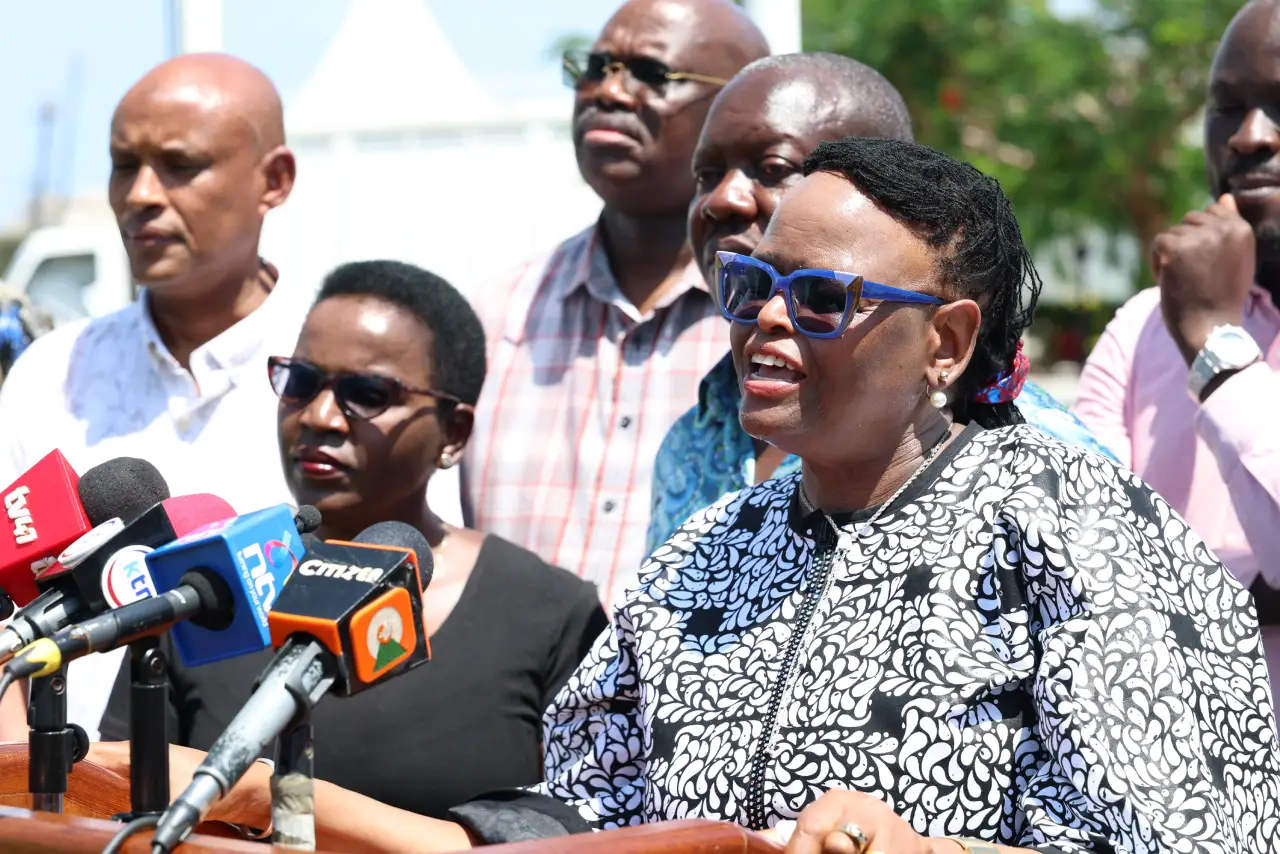
Speaking at a news conference while presenting a communique on resolutions following the conclusion of the 38th NCAJ meeting in Mombasa, the CJ said that the council reaffirmed its commitment to strengthening collaboration across the justice sector institutions.
She further said that NCAJ also reaffirmed its commitment to advance reforms that promote timely, accessible, inclusive, people centred and accountable justice for all Kenyans.
The CJ said that NCAJ has resolved to enhance collaboration and partnership in the administration of justice.
“The council reaffirmed the need to enhance coordination through sustained dialogue and adherence to constitutional principles and the need to always enhance access to justice,” said the CJ.
She further said that effective collaboration among justice sector institutions is indispensable to fair, efficient and accessible justice delivery.
The CJ said that council members are committed to sustained dialogue and joint efforts and working toward a unified approach that will foster a shared commitment in the best interest of justice seekers and all the people.
“To support collaboration, the council also underscored the need for all justice-sector institutions to advance digital transformation while ensuring that no institution is left behind,” said the CJ.
Chief Justice Koome also said that NCAJ reactivated its Ad Hoc Committee on election preparedness led by Independent Electoral and Boundaries Commission (IEBC).
She said that the committee will coordinate justice sector preparedness and strengthen collaboration among relevant institutions to support constitutional, peaceful and credible electoral processes.
The CJ also said that the council has resolved to strengthen justice system interventions against wildlife crimes by calling on all institutions to enhance their interventions to prevent, investigate and respond effectively to the crimes.
NCAJ, the CJ said, had also approved the draft Sexual Offences Bill 2026, which upon updates will be submitted to the National Assembly.
“This Bill demonstrates our commitment to responding to evolving forms of sexual and gender-based violence including technology facilitated offences while strengthening the legal frameworks relating to femicide and other emerging challenges,” said the CJ adding that it will also improve response and care for survivors of gender-based violence.
The CJ also said that the Council has prioritized road safety over the past year recognizing it as a national priority essential for saving lives, reducing court congestion and ensuring timely justice for court users.
The NCAJ, Chief Justice Koome said, has approved a revised Identification Parade Form for use by the National Police Service which aligns with the constitution, international human rights standards, and best practices in criminal justice administration.
She said the council recognized identification parade as a critical evidentiary process in criminal investigations, ensuring witnesses can identify suspects fairly and transparently.
The CJ further said that NCAJ established committees led by the Judiciary and correctional services department to explore establishment of specialized recovery treatment courts and open prisons.
“The committees will assess the feasibility of establishing recovery treatments courts and open prisons as innovative approaches to rehabilitation, reduced recidivism and successful reintegration of offenders into society,” said the CJ.
She also said that NCAJ considered the national guidelines on interviewing children in the justice system to protect them, uphold their rights and ensure access to justice.
“These guidelines provide a framework for child sensitive interviewing practices, promoting a more equitable and effective child justice system that serves children’s best interest,” said the CJ.
Be the First to Comment