
A Kenyan court has allowed three Kenyans to be extradited to the United States of America (USA) to face prosecution over a multi-million-dollar scam.
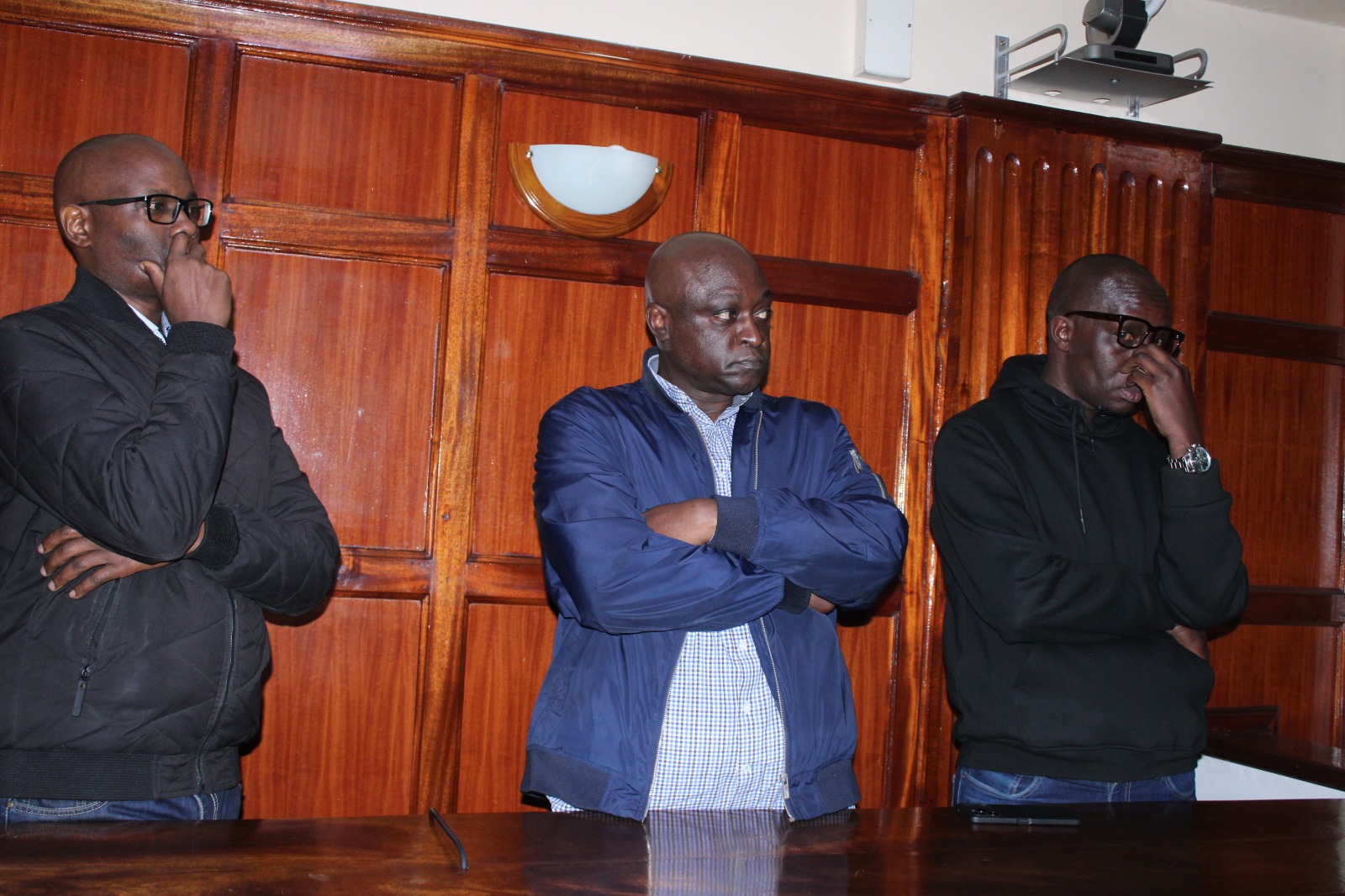
Those to face trial in USA are Peter Omari, Francis Asanyo, and Elvis Obaigwa.
Soon after allowing the plea by the US Government to have the three handed over for prosecution overseas, Milimani law courts senior principal magistrate Paul Mutai cancelled their bond of KES 5 million then directed they be remanded at Kileleshwa Police Station awaiting other procedures.
However defense lawyer Cliff Oduk urged the magistrate to stay the extradition order pending appeal.
“I urge this court to stay the extradition direction pending the outcome of the intended at the High Court,” Mr Oduk urged.
The magistrate granted the defense lawyer 14 days to challenge his ruling enforcing an international warrant of arrest.
On March 2,2026 the director of Public Prosecutions (DPP) Renson Ingonga filed an application in court seeking an international warrant of arrest issued by the US District Court, for the Eastern District of Virginia/Richmond Division.
The warrant was dated November 15,2023.
The trio are being sought in the US to face trial for the offences of conspiracy to commit computer intrusions, conspiracy to commit wire fraud, aggravated identity theft and aiding and abetting crime.
The DPP received the request to hand over the Kenyans to the US Government on February 25,2026 through the Attorney General’s (AG) Chambers.
The AG had earlier received communication through the Foreign Affairs Ministry from the US seeking the extradition of the three.
Moving the court to allow the US request, the DPP told the trial court that Kenya and US have a common stand in fighting crime and economic related illegalities.
In his objection Mr Oduk said Kenya and US had not extradition treaty arguing the one which existed was severed almost a century ago in 1931
“For the last 95 years there has been no extradition treaty between Kenya and US and therefore this court cannot give away ours sons to a foreign country,”Mr Oduk submitted.
But the DPP through a prosecuting counsel Virginia Kariuki said Kenya has signed and ratified the United Nations Transnational Organized Crime Convention (UNTOC) since 2004.
Ms Kariuki told the court under the UNTOC money laundering is declared as an “extratable offence.”
The magistrate observed in the ruling that “by dint of Article 2(5) and (6) of the Constitution of Kenya the general rules of international law shall form part of the Law of Kenya and any treaty or convention ratified by Kenya shall form part of the Law of Kenya.”
Dismissing the objection by the three extradites Mr Mutai stated,“ it is clear that the state opted to pursue extradition process using convention signed by both states (kenya/us).”
The magistrate further noted that both Kenya and the US are parties to UNTOC and there is a proper basis for extradition.
Ruled Mr Mutai :“Am satisfied that a case has been made out by the DPP against the three respondents to warrant extradition. The offence allegedly committed is extratable.”
He went on to rule,”As a consequence, the application dated March 2,2026 is hereby allowed.”
Sealing their fate, the magistrate ordered that the respondents are to be returned out of Kenya and surrendered to the USA to stand trial for the explained and disclosed tax crimes.
The three had flown into Kenya and US crime busters had been trailing the suspects.
They were arrested from their rural areas in Kisii County.
In his plea the DPP disclosed the suspects allegedly fled from USA but were arrested through a joint effort by the directorate of criminal investigations (DCI), the Interpol and the Federal Bureau of Investigations (FBI).
The magistrate further heard that during their incarceration the United States Law Enforcement Agencies shall avail the formal extradition request through the diplomatic channels.
“’DCI received information from the FBI in Richmond Virginia within USA that the three suspects plus other conspirators at large were involved in orchestrating and conducting Business Email Compromise (BEC) and Vendor Account Compromise (VAC),” a crime detective states in the evidence presented to the court.
The serious crimes unit officer stated that the fraudulent schemes were geared to exploiting online Vendor Self Service (VSS) platforms set up by US State and Local Government Entities for the management of financial transactions from April 2019.
The trial magistrate heard the suspects in cahoots with other co-conspirators registered internet domain names that were deceptively similar to the domain names of legitimate companies having contracts with the intended organizational victims.
The Court heard: “The respondents and co-conspirators set up email accounts incorporating these deceptive domains, and employed social engineering tactics to trick the victims to change the details of upcoming payments to bank accounts controlled by BEC conspiracy.”
The court heard the respondents and other co-conspirators allegedly recruited several US based individuals referred to as Money Mules (MM) to open US-based bank accounts in order to receive the financial proceeds from BEC and VAC amounting to “Millions of US Dollars”.
“The respondents allegedly directed the MMs on how to wire and launder the funds back to Kenya,” the court heard.
FBI sought the assistance of the DCI to identify the suspects’ cell phone numbers, address, current locations, previous criminal records and close associates.
Be the First to Comment